A brief introduction to the history of gauges.
The concept of measuring pressure originated in the 17th century, with early instruments playing a pivotal role in the advancement of science and industry. In 1643, Italian physicist Evangelista Torricelli developed the first known device for measuring atmospheric pressure—the mercury barometer. This instrument utilized a glass tube filled with mercury to demonstrate the existence of atmospheric pressure and vacuums, laying the groundwork for future scientific exploration.
By the mid-19th century, pressure measurement technology had significantly progressed. In 1849, French engineer Eugène Bourdon patented the Bourdon tube pressure gauge, a mechanical device that provided accurate readings of pressure in various systems. Originally designed to enhance the safety of steam locomotives, the Bourdon gauge became widely adopted across multiple industries due to its reliability and precision.
Heating, ventilation, and air conditioning (HVAC) systems today utilize pressure gauges from the same early concepts to monitor refrigerant and gas pressures, ensuring efficient and safe operation.
An example of early style gauge that may have been used for steam applications:

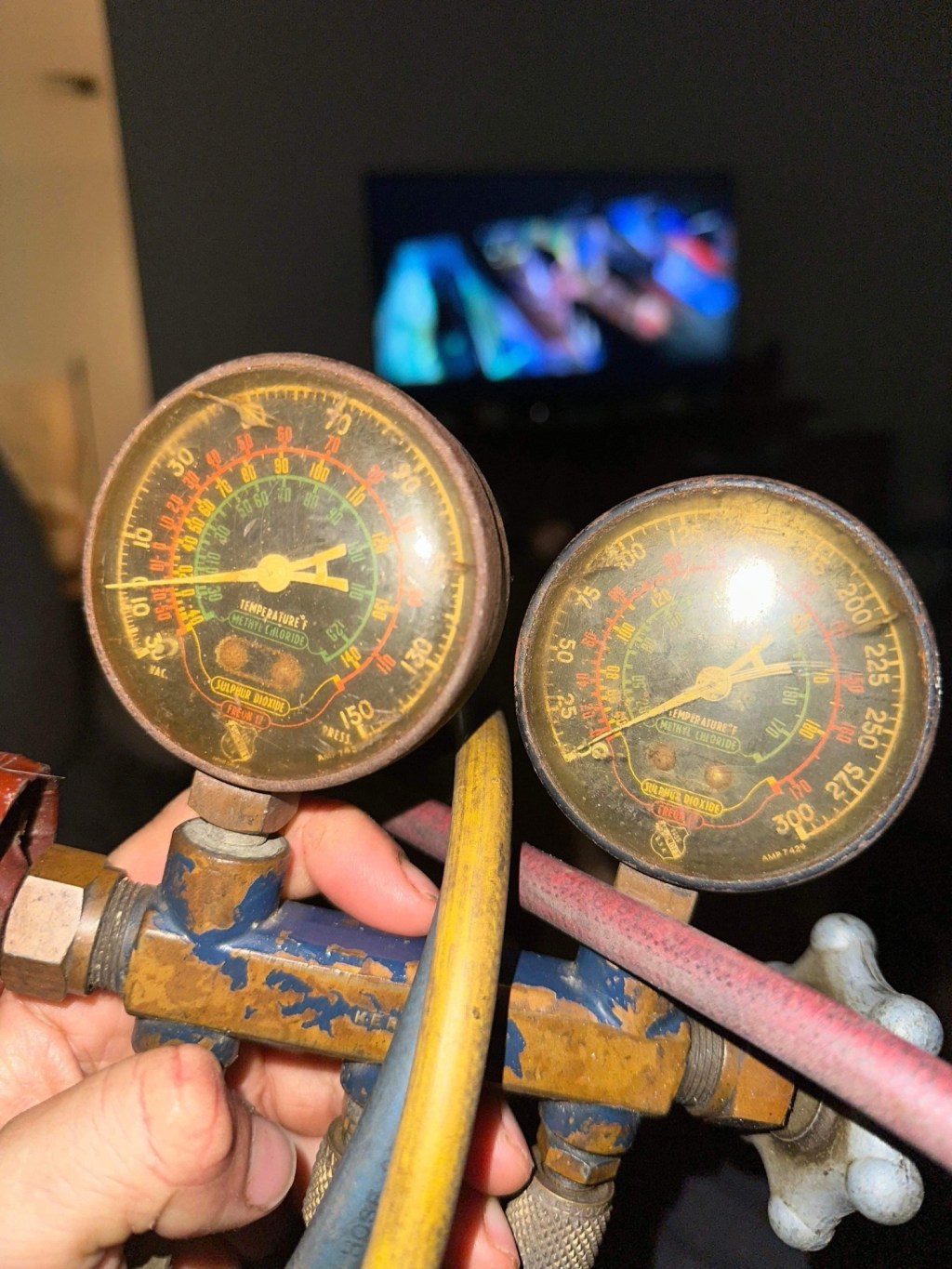
A more sleek and modern example of gauges used for refrigeration

 HVAC History