The Janitrol brand traces its roots back to the late 1920s, when it was originally developed by the Surface Combustion Company of Toledo, Ohio. Founded in 1915, Surface Combustion was a pioneer in industrial heating equipment, and in 1927, it launched the Janitrol division to focus on small-scale heating systems. The name “Janitrol” itself was a blend of “janitor” and “control,” a nod to the goal of bringing automatic, controlled heat to homes and businesses. By the 1930s, Janitrol was producing unit heaters, oil burners, and early gas furnace systems — designed for the growing market of centralized home heating.
During World War II, Janitrol made a name for itself beyond residential heating. The company shifted its production toward military contracts, building heating systems for aircraft and ground support vehicles. This wartime experience in precision engineering later influenced its postwar product lines. In the late 1940s and into the 1950s, Janitrol introduced compact, high-efficiency gas furnaces that were a perfect fit for America’s rapidly expanding suburbs. By the mid-1950s, Janitrol had become a familiar brand in homes, schools, and small businesses across the U.S.
Their earlier versions of furnace emblems had included three distinct categories of emblems (Fig. A) was deluxe: Janitrol’s elite lineup of furnaces. Mid range had you looking at their Pacesetters (Fig. B) and J-line for their hanging heaters (Fig. C). (Fig. D) and (Fig. E) was what you may have found on economy style units.
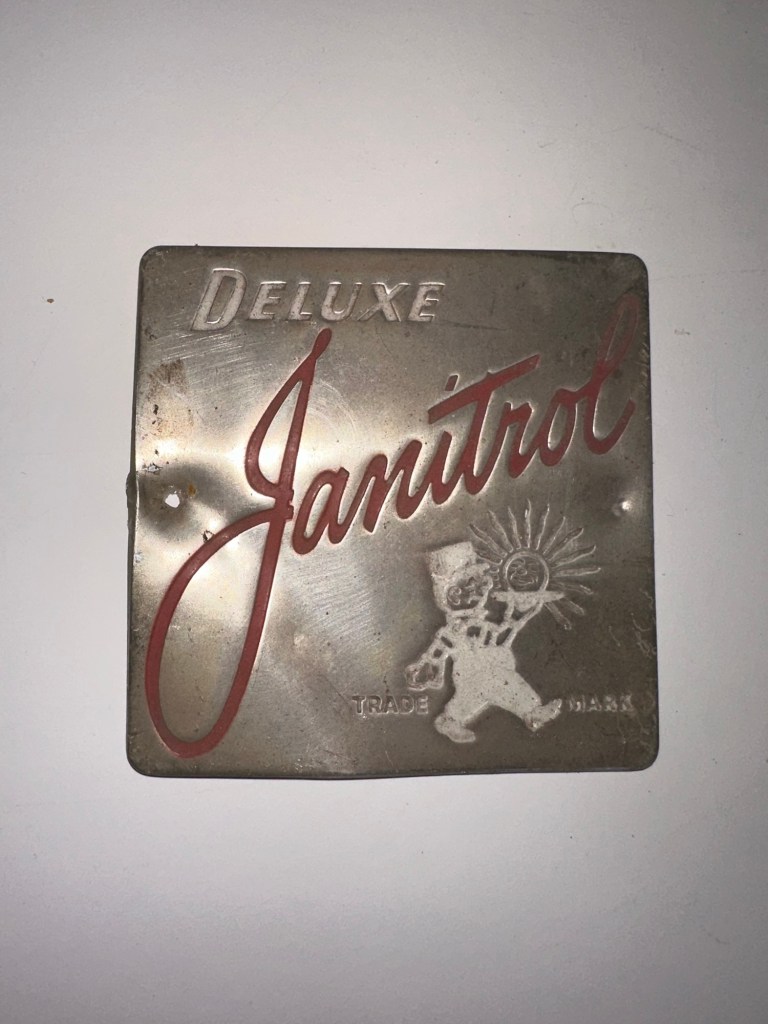
Fig. A

Fig. B
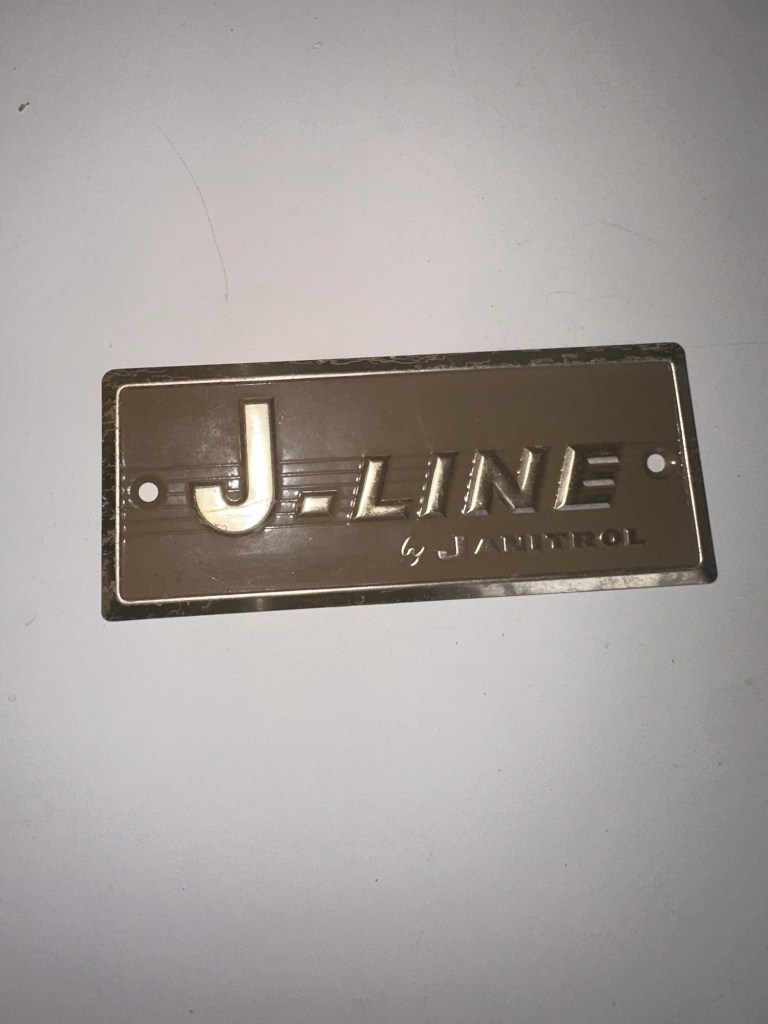
Fig. C
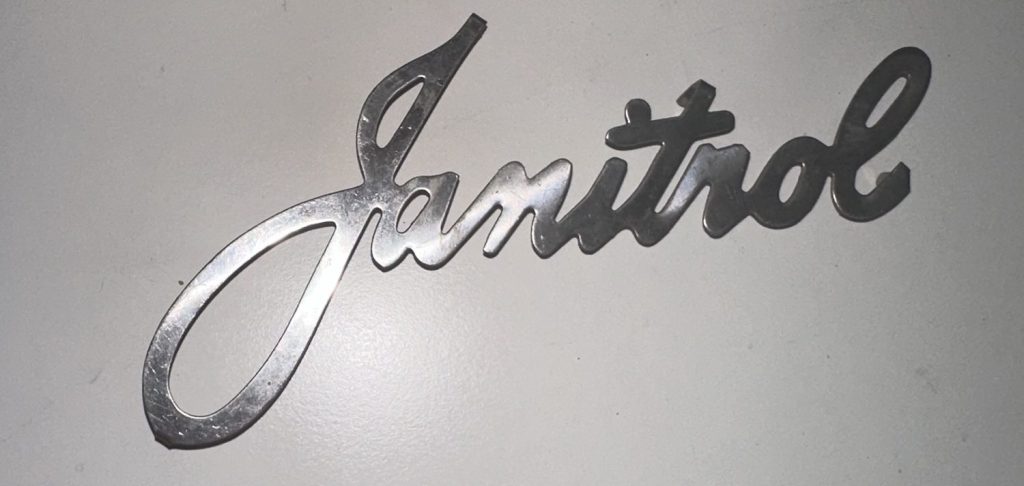
Fig. D
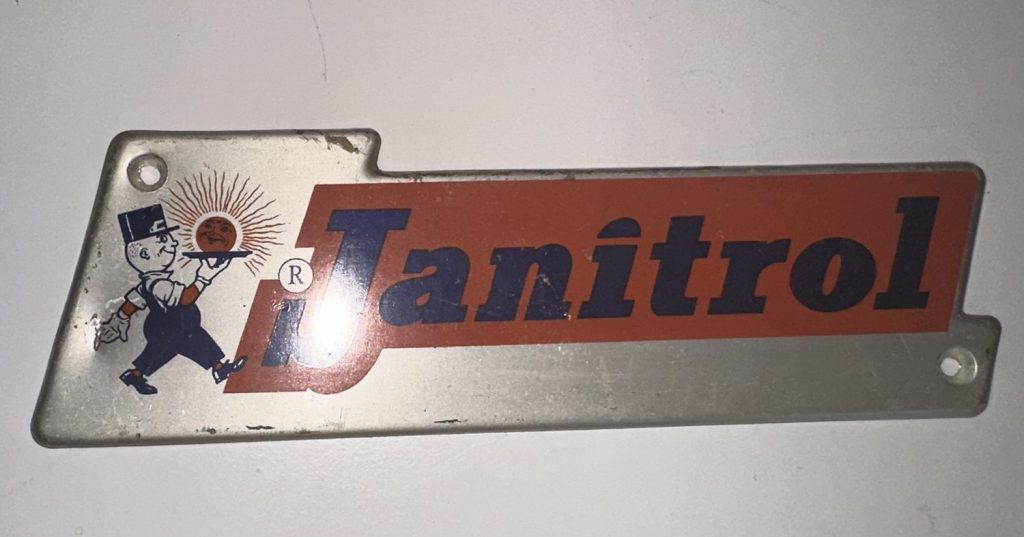
Fig. E
The 1960s and 1970s saw Janitrol expanding into central air conditioning and packaged HVAC systems. Known for solid construction and simple maintenance, Janitrol equipment became popular among contractors looking for dependable, American-made units. During this brief time between the 70’s and 80’s Janitrol removed their iconic man in their branding serving a ray of sunshine and opted for emblems like (Fig. F) and (Fig. G). On their space heaters that had either been optimized for aircraft they’d use the emblems like (Fig. H) and (Fig. I).
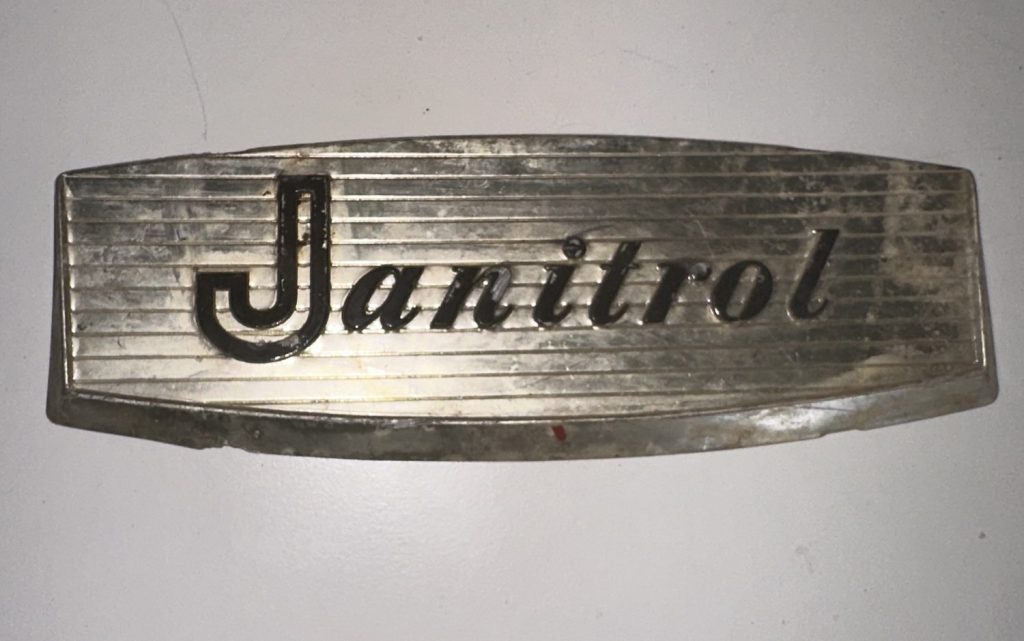
Fig. F

Fig. G

Fig. H

Fig. I
However, as the HVAC industry grew more competitive in the 1980s, the brand was acquired by Goodman Manufacturing in 1982. Goodman had ambitions to become a major national player and used Janitrol’s existing infrastructure and designs as a foundation for its own expanding product line. Over time, the Janitrol name was phased out in favor of the Goodman brand.
Even though the Janitrol label disappeared from new units by the 1990s, many of its systems remained in service well into the 2000s — a testament to their durability. Today, Janitrol lives on as a respected piece of HVAC history. It reflects an era of American innovation in home comfort, when companies responded to rapid suburban growth with accessible, efficient heating and cooling solutions. For HVAC historians and technicians alike, Janitrol represents a legacy brand that quietly helped shape the modern standard of residential comfort.
 HVAC History
Leave a comment