Thatcher Furnace started in 1850 in Newark, New Jersey, when John M. Thatcher built his first tubular furnace—a sturdy, efficient design that caught on fast. The business grew, changing names a few times before settling on Thatcher Furnace Company in 1890. By the early 1900s, Thatcher had moved into a bigger plant in Garwood and opened offices in Chicago and Boston, selling everything from ranges to hot water boilers.
In the 1930s, Thatcher rolled out oil and gas-fired “automatic winter air conditioners,” a twist of words on the furnace that had been adopted by other companies like Holland Furnace. By the time of World War 2, they made ammunition lockers and ordinance parts, then returned to heating systems after the end of the war. The company eventually dissolved and had sold to Holland Furnace in 1963 and Crane Corporation in 1964, the Thatcher name faded by the late ’60s—but it left behind a century-long mark on American home heating with units still being found and serviced today.
Below are many of the emblems you would have seen on applications from the company before the acquisition to Holland Furnace. (Fig. A) In general, these thin metal emblems would have been on their economy models. (Fig. B) On this style of emblem had been reserved for medium efficiency models as well as space heaters in which they attempted to compete with Reznor. (Fig. C) was also seen on higher end space heaters as well as the conversion burners from coal to oil or gas.

(Fig. A)

(Fig. B)
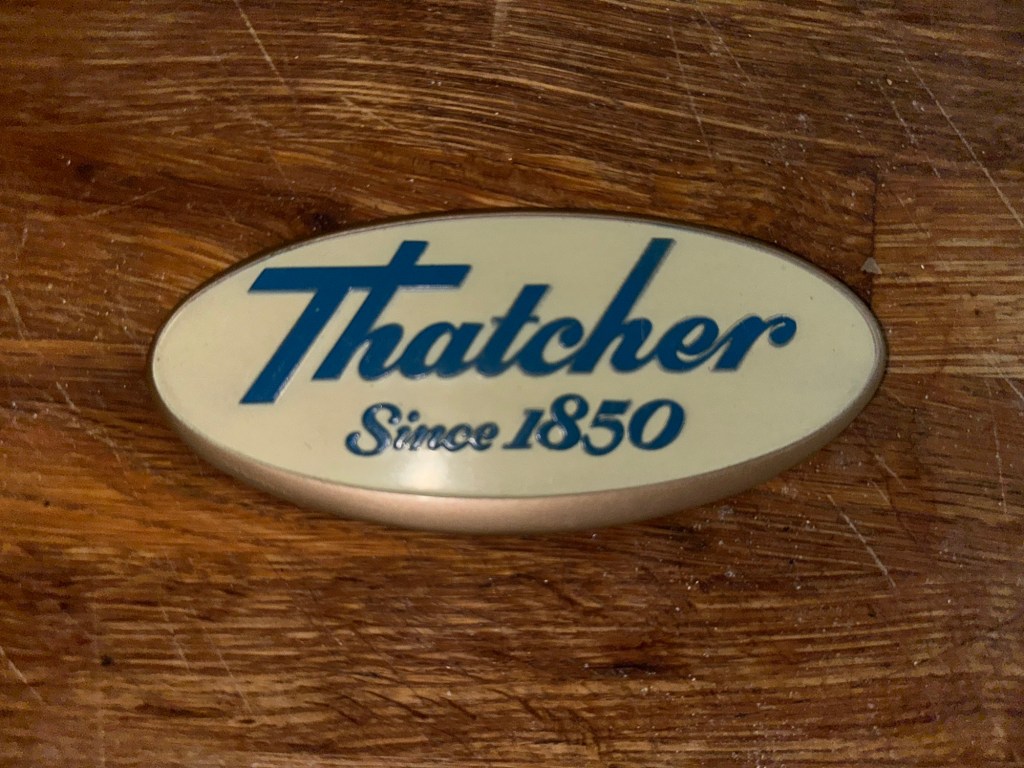
(Fig. C)
Moving up to the early stages of after war effort, the company finalized with a look that would last them to the acquisition of the company. (Fig. D) was the emblem seen on all their furnaces starting in 1950. (Fig. E) shows a serial plate from 1956. The final picture, (Fig. F) shows a typical furnace using that particular emblem.
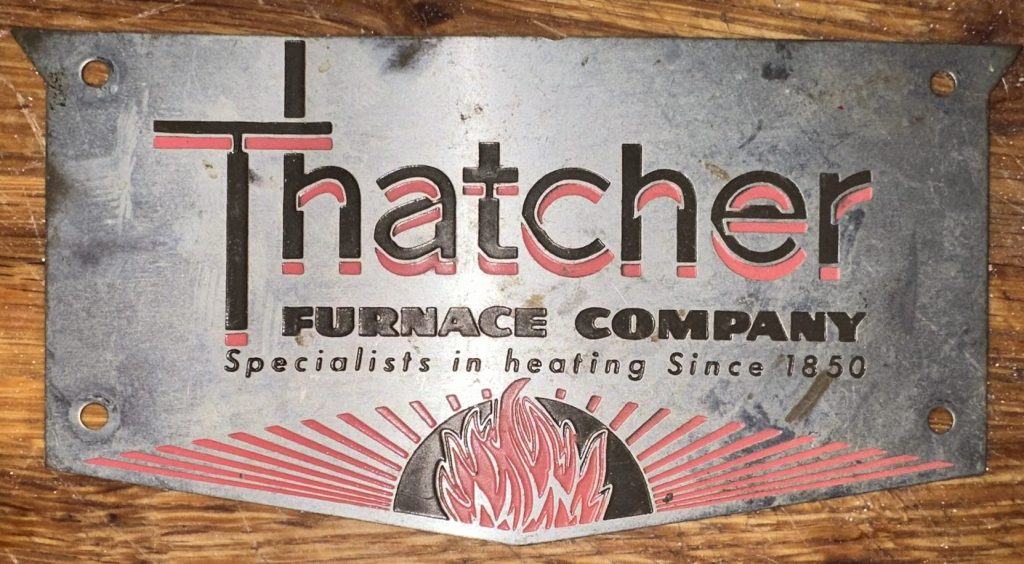
(Fig. D)

(Fig. E)

(Fig F.)

 HVAC History
Leave a comment