Before air conditioning was a household word, a young engineer named Willis Carrier changed the world with a cool idea. In 1902, Carrier invented modern air conditioning to solve a printing problem, but little did he know, he’d spark a revolution in comfort that would transform everything from movie theaters to skyscrapers. From foggy factory floors to sleek, whisper-quiet systems in today’s homes, Carrier’s legacy is one of innovation, cool breezes, and climate control that made the modern world possible. Step into the story of a brand that turned air into art.
1915 marks the start of our Carrier Badge Tour: We see the first cast of the Carrier Air Conditioning & Drying Equipment logo come to life (fig. A). Through a transition period between his initial startup founding the Carrier Engineering Corporation, they saw immediate success 18 days in American Ammunition Company marking their first contract as well as assisting with the Allied War Effort. After the war, Carrier saw success selling equipment to movie theaters and all throughout USA and the rest of the world. With the first plant being opened up in Newark, New Jersey, the first and rarest style carrier badge shown in (fig. A) shows the Newark manufacture and is something that would have been found on any of their industrial scale refrigeration machines. In 1919, Carried had hired Esten Boiling as their Publicity Engineer to market words that would be later seen in other emblems like (fig. B) such as “Make Every Day a Good Day”, “Manufactured Weather” and “Weathermakers to the World”. That particular badge in (fig. B) would have been featured on numerous chillers throughout the 20’s all originating from the same original Newark plant.
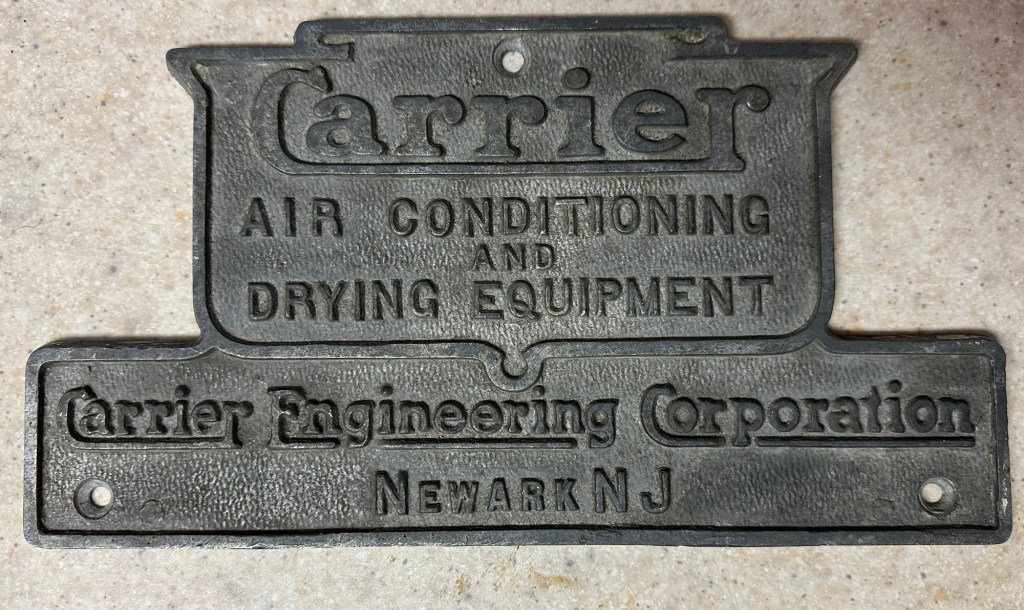
Fig A.
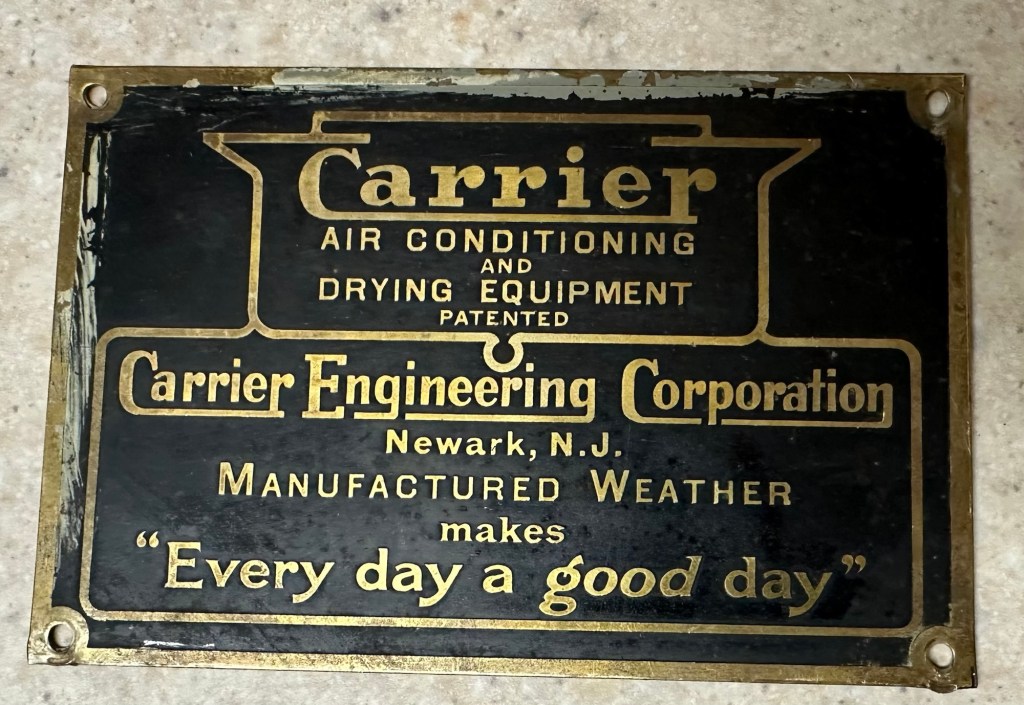
Fig B.
1930’s Weathermakers to the World:
During the challenging decade of the 1930s, Carrier Corporation solidified its reputation as the “Weathermakers to the World” by pioneering advancements in air conditioning across various sectors. The particular emblem that was used to advertise that product is shown in (Fig. C) which had been featured in their new plants and large equipment. Despite the economic strains of the Great Depression, the company introduced the Conduit Weathermaster System, an innovative solution designed for large, multi-unit buildings and skyscrapers. Around this time, Carrier had just come out with their first external units that would later be considered PTAC’s (Packaged terminal air conditioner). Their earlier versions would feature this style badge on their products (see fig. D) and (Fig. E). Later models around 1938 would showcase the Weathermaker emblems in (Fig. F)

Fig. C

Fig. D

Fig. E
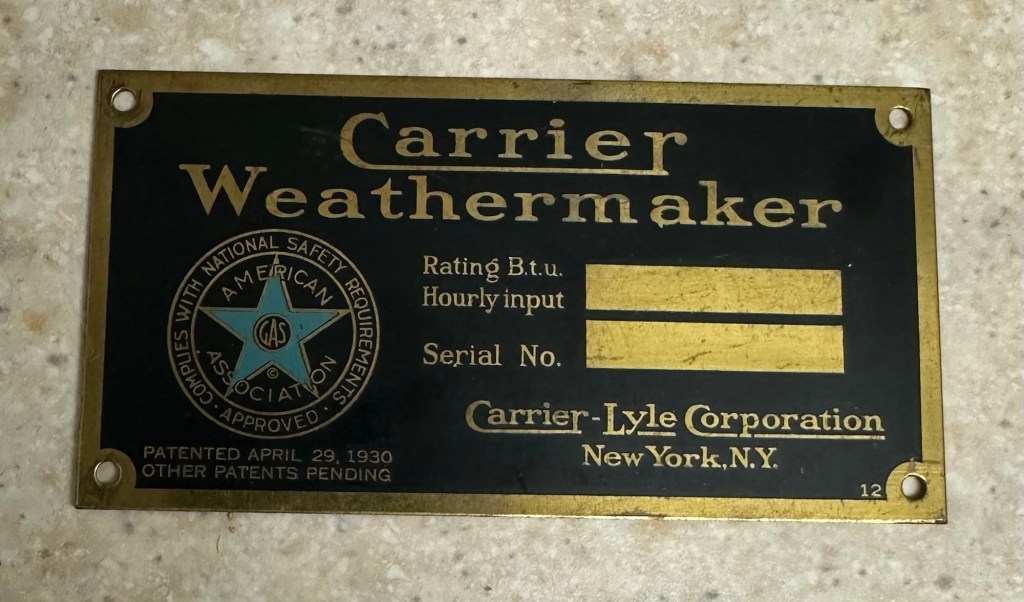
Fig. F
 HVAC History