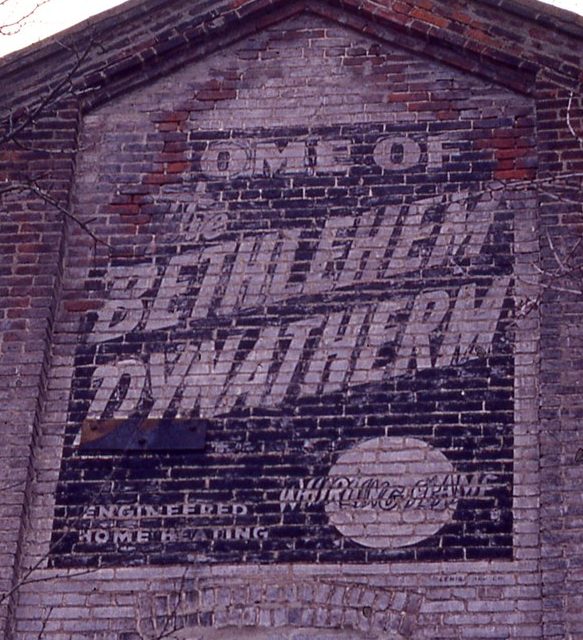
The roots of Bethlehem’s heating legacy go all the way back to 1832, when a man named Ernst Lehman started a small brass foundry and coppersmith shop in the heart of Bethlehem, Pennsylvania. His son, B.E. Lehman, helped grow that little shop into something bigger, the Bethlehem Foundry & Machine Company, officially established around 1863 along the Lehigh River. They built steam valves, engine parts, and iron fittings during a time when coal trains and steel mills were changing the American landscape. For over 50 years, their shop supported the booming industries around them, quietly laying the foundation for something even bigger in the world of heat.
By the 1930s, heating technology had moved beyond coal and steam. That’s when the Bethlehem Dynatherm Boiler Division emerged, creating a demand for different needs. Their models developed a swirling flame characterized by their emblems: a design of their burners that was used as their “Whirling Flame” logo. (Fig. A) and (Fig. B) show their initial designs for emblems dated 1930’s-1960’s
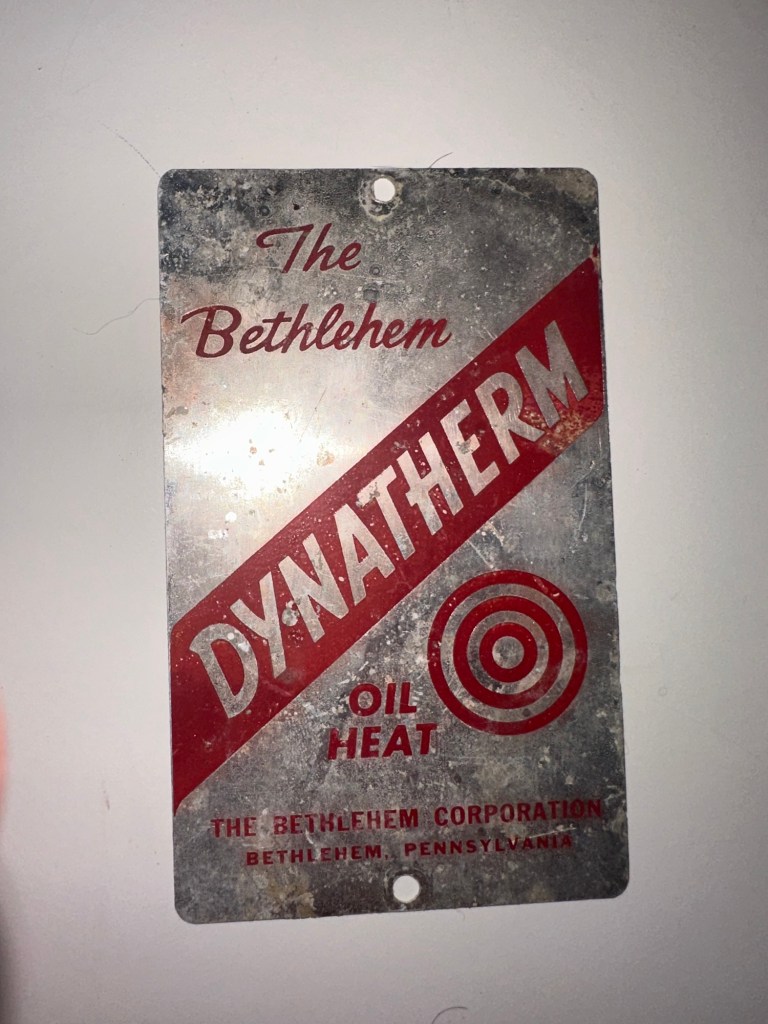
Fig. A
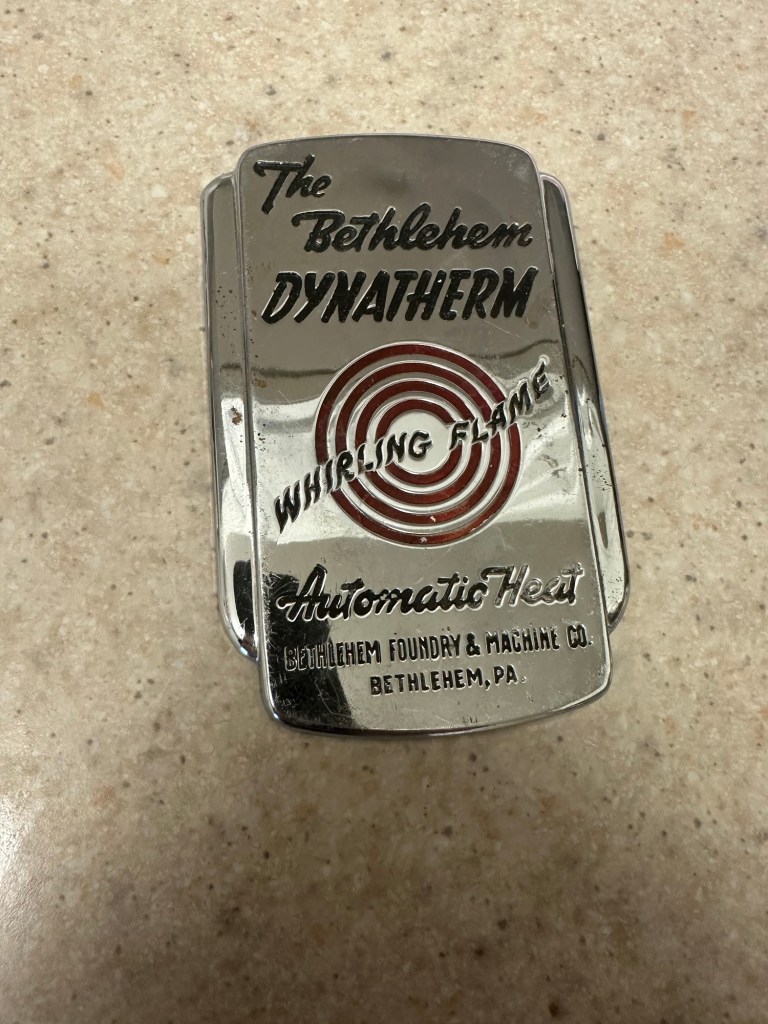
Fig. B
Forgotten tucked away in Bethlehem, PA is their old abandoned plant. A relic of a bygone era.
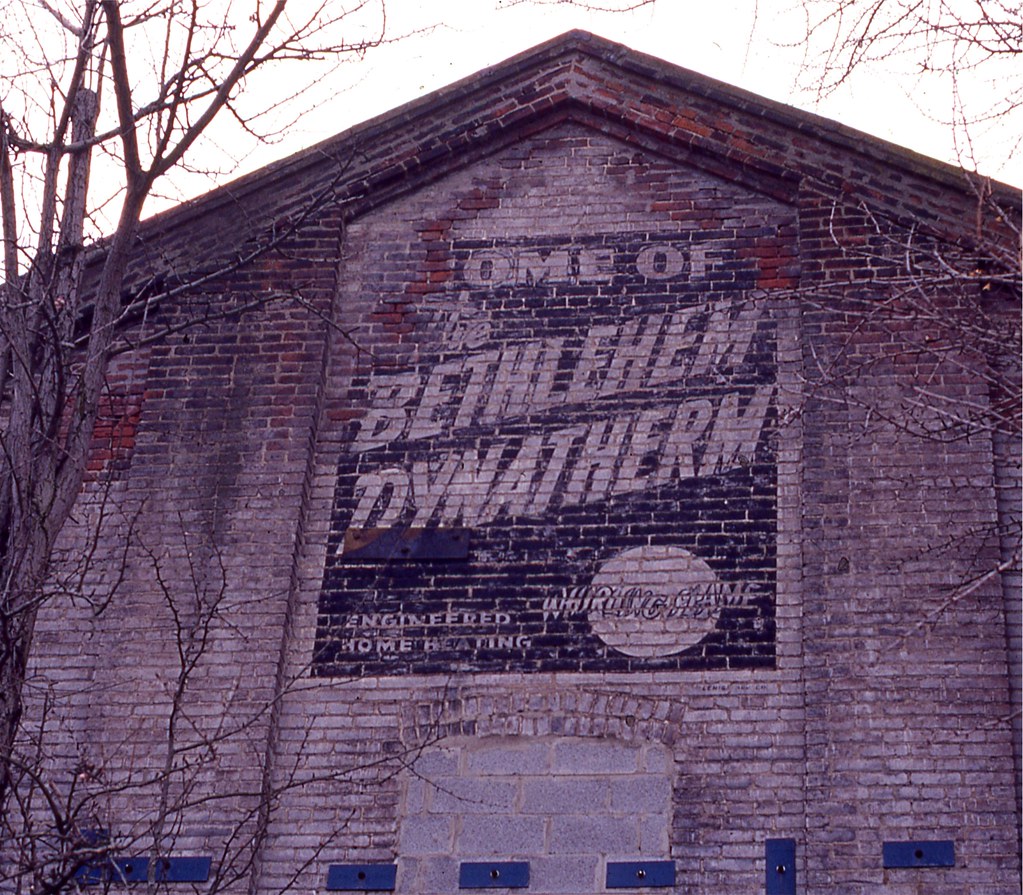
Dynatherm became known for crafting some of the most overbuilt boilers in the business, think of massively thick, heavy Scotch marine–style units, often made of ¼-inch steel. These weren’t throwaway appliances. They were made to last generations. People in Pennsylvania, New Jersey, and beyond relied on them to heat homes, schools, and small buildings. Many HVAC techs that see these behemoths, they’ll tell you: “Yeah, there’s still a few Dynatherms running strong.”
Even though the name eventually faded by the late 20th century, Bethlehem Dynatherm’s reputation stuck. Old-timers in the trade still remember those units, not just for how long they lasted, but for how solid and simple they were. In a way, the story of Bethlehem’s foundry and boiler makers is really the story of American heating itself: small beginnings, big machines, and craftsmanship that earned respect in basements and boiler rooms across the country.
 HVAC History
Leave a comment